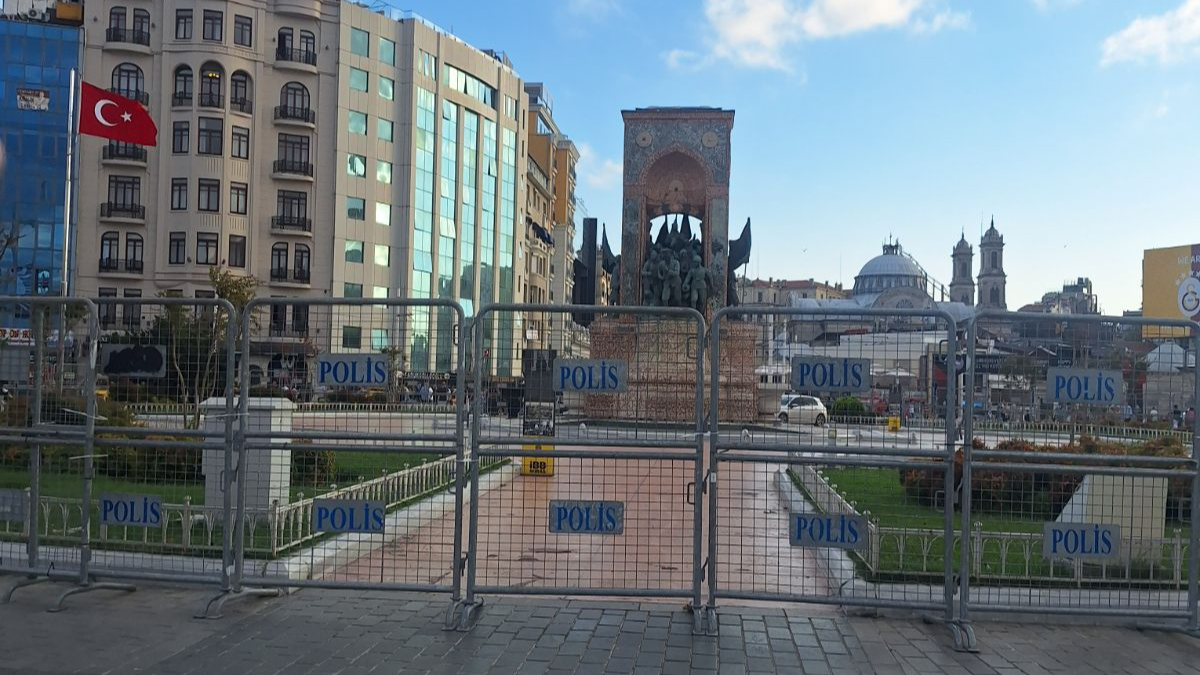
Taksim isn’t just a square; it’s a giant, loud, beating heart. If you’ve ever stood in the middle of it, you know it can be a lot to take in. You’ve got millions of footsteps, vendors shouting over each other, and that constant, distant hum of Istiklal Street.
But right in the center, there’s this weird pocket of quiet strength that just stops you.
I found myself staring at the Republic Monument. I didn’t want to just take a tourist photo and move on. I wanted to actually look at it. It’s not just bronze and stone there’s a serious amount of soul in those carvings. You can see the struggle in the figures, the way the light hits the folds of their clothes. It doesn’t feel like a statue; it feels like a presence. It’s heavy with the kind of courage it takes to actually build a country.
What really got me was how protected it felt. You see the fences and the guards, and at first, it feels like “security.” But looking at it as an artist, it feels more like the city is holding its breath to keep a candle from blowing out. Taksim has seen everything protests, massive celebrations, and a lot of tears but the monument just stands there, steadfast.
Around it, life is a mess. You’ve got kids chasing pigeons, tourists looking for the perfect angle, and locals doing that focused “Istanbul walk” to get to work. Above it all, the red flag is always moving in the breeze. It’s a strange mix of glass skyscrapers and ancient stone all trying to talk to each other.
As I walked around the base, I felt this weird sense of responsibility. Not that I owned the place, but that I was a witness to it. Why can’t we just let art exist without the rush?
Beauty like this is fragile. Not because the bronze will break, but because we’re all moving so fast we might forget to actually see it. Protection isn’t just about fences; it’s about paying attention.
Taksim is like a painting that changes every hour with the light. Standing there makes you feel tiny, but weirdly connected to everyone else in the crowd. You realize the best way to honor history isn’t just to take a picture of it, but to actually feel that energy and carry a bit of that strength with you when you leave.